



Blog
Learning how to choose the right trash bags is no longer just about picking a gallon size or hunting for the lowest wholesale price. For commercial buyers, the ideal liner must perfectly match your specific waste type, container dimensions, and daily facility working conditions.
Many trash bags look similar, especially black trash bags, but their real performance can be very different. A quality trash bag should have honest thickness, proper material formulation, clear resin quality, reliable seal strength, consistent workmanship, and stable performance in real use.
In a competitive market, some bags may look cheaper at first because less material is used, the film is thinner than stated, the formulation has been changed, fillers are added, or lower-grade recycled material is used without clear disclosure. These shortcuts may reduce the purchase price, but they can lead to tearing, leaking, strong odor, double-bagging, wasted labor, and higher long-term cost.
This guide explains how to choose the right trash bags by evaluating physical samples before bulk ordering, ensuring you invest in the right product instead of relying only on price or a product label.
Why Commercial Trash Bag Quality Matters More in 2026
For modern businesses, commercial liners are an essential daily operating supply. To understand how to choose the right trash bags, buyers must look at how poor quality creates severe hidden operational costs:
- Bags tear suddenly during waste removal, meaning you failed in how to choose the right trash bags.
- Wet waste leaks from the bottom, causing cross-contamination because you didn’t know how to choose the right trash bags.
- Sharp or irregular manufacturing waste easily punctures the film.
- Staff are forced to double-bag to avoid failure, doubling your material spend.
For volume business buyers, the real cost of a commercial bag is the total cost of use, not just the unit price on the invoice. A better buying decision on how to choose the right trash bags starts with understanding the core metrics of plastic engineering.
A better buying decision starts with understanding what makes a trash bag reliable.
1. How to Choose the Right Trash Bags by Verifying Real Mil Thickness
Many buyers ask for a specific thickness when purchasing commercial liners, but the stated thickness on a quote or carton does not always tell the full story. If you want to master how to choose the right trash bags, you must realize a bag may be labeled as “heavy-duty,” but if the actual film is thinner than expected, it will fail in real use. This is exceptionally difficult to see by eye, especially with black trash bags, because dark masterbatches naturally hide visual film thinning.
When film thickness is inconsistent, common problems include:
- The bag stretches too much when filled.
- The top edge tears during lifting.
- The bottom breaks under weight.
- Wet trash is more likely to leak.
Understanding how to choose the right trash bags means looking beyond the product label; a quality bag must perform consistently under real-world commercial stress. Before placing a bulk purchase order, buyers evaluating how to choose the right trash bags should request physical production samples to benchmark future freight shipments. Later orders should match the approved sample in thickness, weight, hand feel, and real-use performance.
2. How to Choose the Right Trash Bags Using Case Weight Comparison
Not every procurement department has a professional micrometer thickness gauge. Fortunately, discovering how to choose the right trash bags can be done by performing a simple weight comparison, which is one of the easiest ways to identify material reduction.
When trash bags share the exact same size, stated thickness, and material type, the overall bag weight should be reasonably consistent. In your strategy for how to choose the right trash bags, buyers can use weight checks in several practical ways:
- Compare the average weight of sample bags from different suppliers.
- Keep the approved sample and compare future orders against it.
- Check the net weight of rolls, packs, or cases.
- Compare bag weight along with actual size and thickness.
When learning how to choose the right trash bags, remember that weight alone does not prove quality, as some factory formulas use heavy fillers rather than useful plastic resin. Therefore, always cross-reference case weight with actual material stretch, tear resistance, and bottom seal strength when testing how to choose the right trash bags. A lighter bag may indicate reduced material, but a heavier bag is not always better if the extra weight comes from filler.
3. How to Choose the Right Trash Bags by Understanding the Material Formula
Many buyers ask whether a trash bag is made from HDPE, LDPE, or LLDPE. These are common base materials, but modern trash bag manufacturing is often more complex than a simple material label.
Trash bags may be made with a single material, a blended resin formula, color masterbatch, recycled content, fillers, or other additives depending on the target application and cost level.
A blended formula is not automatically a problem. In many cases, a well-designed formula can help balance cost, flexibility, strength, puncture resistance, and daily usability. The key question is whether the formula is suitable for the buyer’s real application.
Different commercial environments require distinct material properties to guide you on how to choose the right trash bags:
- Office & Restroom Waste: Needs cost-effective High-Density Polyethylene (HDPE) liners for light, non-sharp trash.
- Restaurants & Commercial Kitchens: Require Linear Low-Density Polyethylene (LLDPE) to handle heavy, wet, and mixed organic waste.
- Warehouses & Industrial Sites: Require thicker, high-tensile LLDPE films to resist punctures from packaging scraps and irregular debris.
Do not evaluate a bag only by the material name. When figuring out how to choose the right trash bags, a buyer should check if the bag stretches before tearing, holds wet waste without leaking, and matches the approved sample from order to order.
4. How to Choose the Right Trash Bags While Identifying Heavy Fillers
Fillers such as calcium carbonate or talc may be used in some trash bag formulations. Fillers can reduce cost and may be acceptable for certain low-cost or light-duty applications. However, when filler content is too high, the bag may lose flexibility, stretch, and tear resistance.
A bag with excessive filler may look thick, but it may not perform like a quality bag. It may feel hard, brittle, or dry instead of flexible and tough.
Common signs of excessive filler include:
- Stiff hand feel
- Poor stretch
- Easy tearing
- White stress marks when folded or pulled
- Powdery residue when rubbed by hand
- Rough surface feel
- Weak performance under load
- Cracking or splitting at stress points
When evaluating how to choose the right trash bags for heavy-duty use or wet kitchen waste, commercial buyers should avoid high-filler options.
A quality supplier should be able to explain whether fillers are used and whether the formulation is appropriate for your application.
For heavy-duty use, wet waste, sharp waste, restaurant waste, contractor cleanup, or high-quality commercial applications, buyers should be especially careful with overly stiff or powdery bags.
5. How to Choose the Right Trash Bags: Virgin vs. Recycled Resin
Plastic bag performance depends heavily on the quality and consistency of the base polymer resin. Knowing how to choose the right trash bags requires understanding these three resin categories:
Virgin Resin Liners
Virgin resin offers cleaner color, lower odor, and superior structural consistency. Knowing how to choose the right trash bags means using virgin resin for retail environments, grocery stores, clear bags, and applications where odor control and visual appearance matter.
Quality Recycled Resin Liners
Quality recycled resin is a practical, eco-friendly option for general commercial waste and black trash bags. When a manufacturer properly controls the recycled source, these liners offer exceptional strength and usability at a lower cost point.
Low-Grade Mixed Materials
Low-grade mixed plastics come from unstable recycled sources or heavy filler mixes. These bags carry a strong, unpleasant chemical odor, feel brittle, and show massive quality differences between batches. A reliable supplier must be entirely transparent when you look for how to choose the right trash bags.
6. Pay Extra Attention to Black Trash Bags
Black trash bags are common in commercial and heavy-duty applications, but they are also harder to judge by appearance.
The dark color can hide:
- Recycled content
- Impurities
- Color variation
- Small specks
- Uneven film
- Surface defects
- Inconsistent material quality
Because visual inspection is limited, buyers should pay more attention to odor, hand feel, weight, stretch, seal quality, and real-use testing.
When checking black trash bags, ask:
- Does the bag have a strong chemical odor?
- Does it feel flexible or brittle?
- Does it stretch before tearing?
- Does it leave powder on the hand?
- Does the bag weight match the approved sample?
- Does the bottom seal hold water?
- Does the bag perform consistently from case to case?
For white or clear bags, visual defects are easier to see. Buyers should check for black specks, gray color, cloudiness, uneven surface, and visible impurities. For black bags, these issues may be hidden, so performance testing becomes more important.
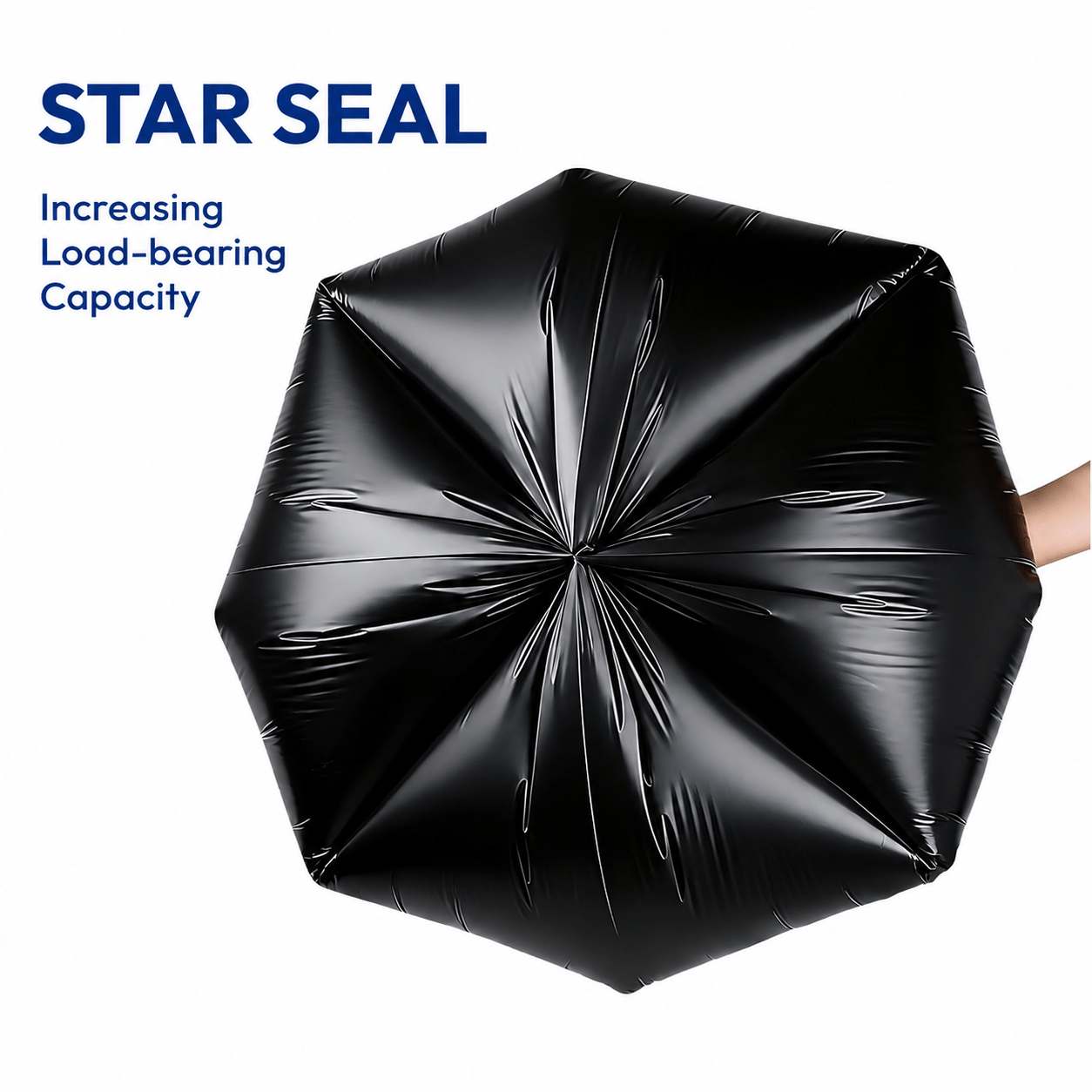
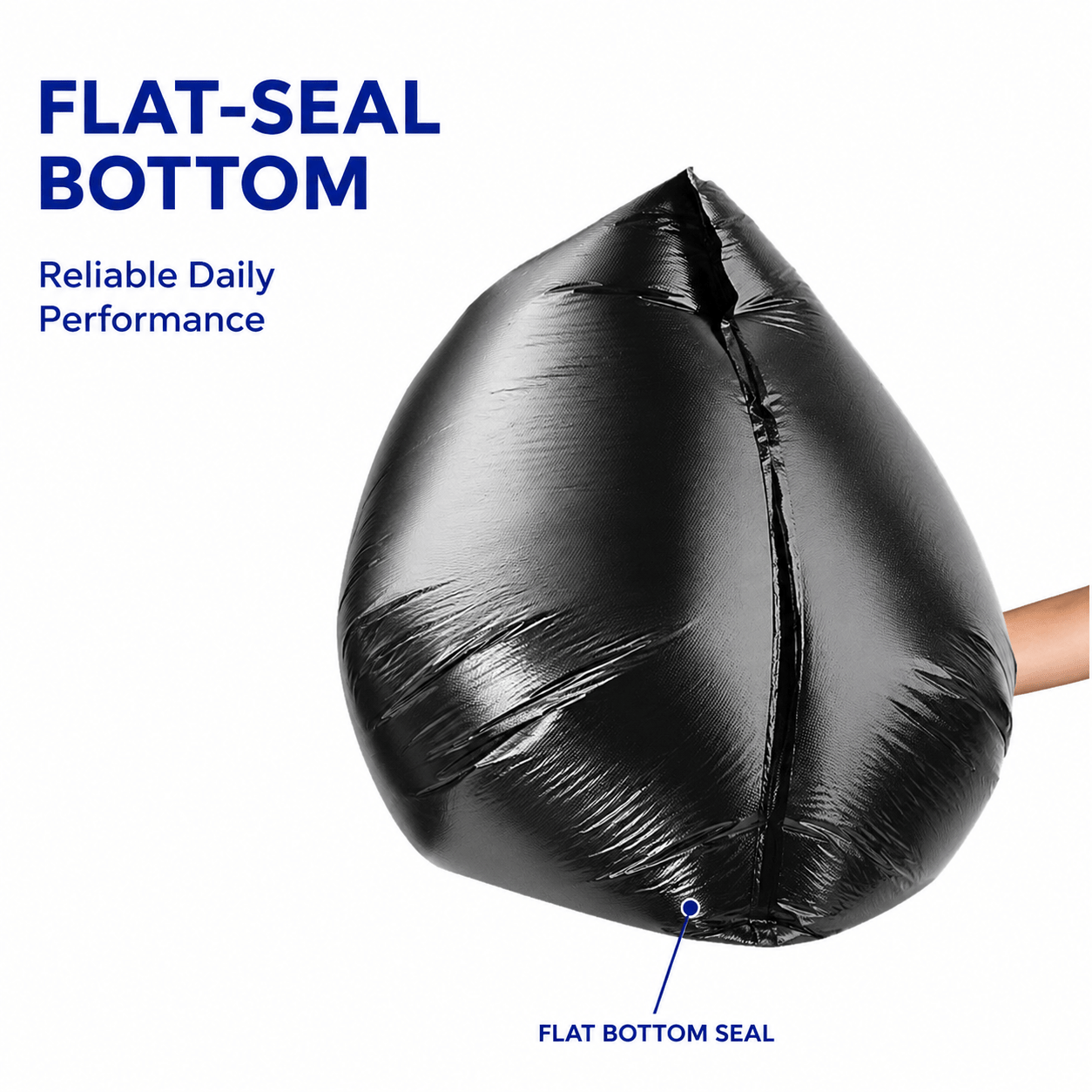
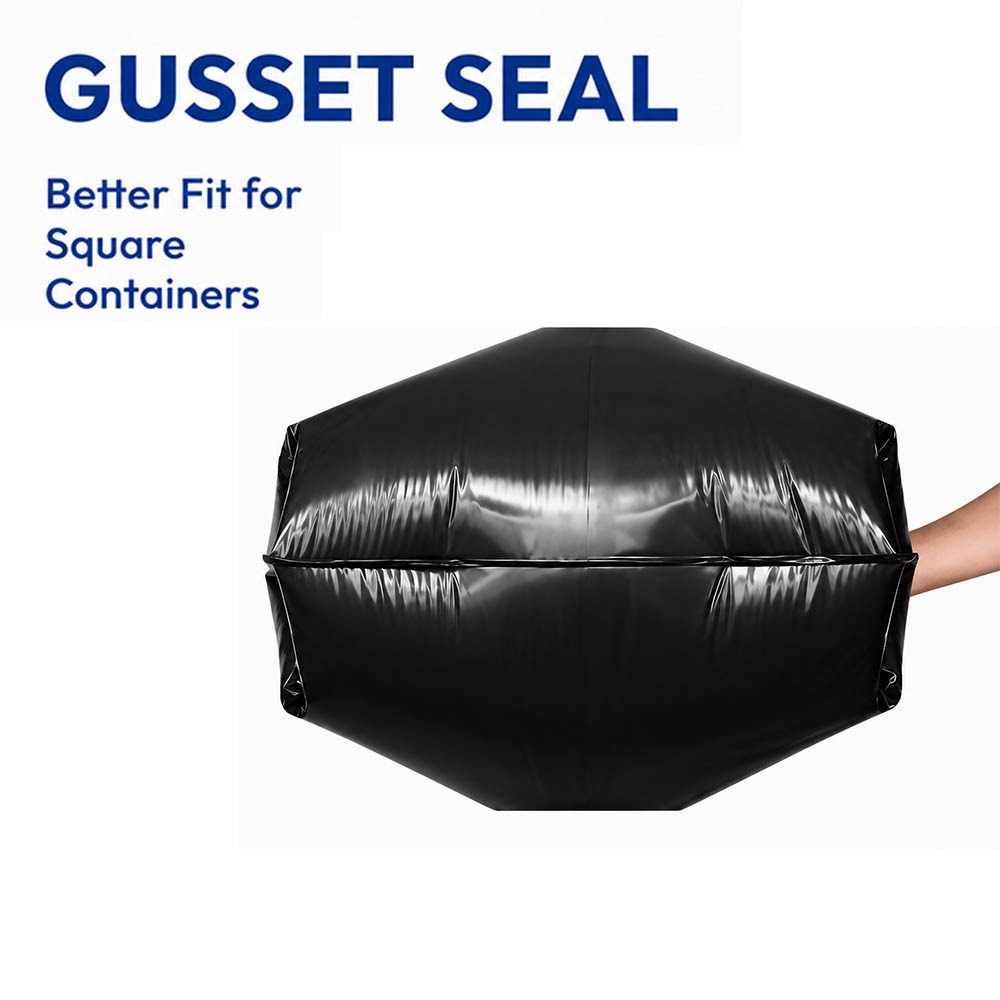
7. How to Choose the Right Trash Bags&Can Liners: Star Seal vs.Flat Seal vs. GUSSET SEAL
Different trash bag applications require different bottom seal structures. GreenWay Plastic can support Star Seal, Flat Seal, and Gusset Seal options based on bag size, thickness, container shape, load requirement, leakage concern, and production specification.
| Seal Style | Representative Sizes | Typical Thickness | Best For | Key Advantage |
|---|---|---|---|---|
| Star Seal | 13 gallon, 33 gallon, 55 gallon | Selected based on load requirement, from light-duty to heavy-duty commercial gauges | Office liners, commercial cans, restaurants, facilities, warehouses, and general heavy-duty liners | Good leak resistance, balanced load distribution, and flexible fit for both round and square trash cans |
| Flat Seal | 4 gallon, 8 gallon, 13 gallon; selected extra-thick custom bags | Common for light-duty small bags; may also be recommended for extra-thick structures around 3.0 mil depending on production requirements | Small household bags, bathroom liners, kitchen trash bags, light-duty liners, and certain extra-thick custom bags | Simple structure, efficient production, and good cost control for suitable applications |
| Gusset Seal | 30 gallon, 45 gallon, 55 gallon, 65 gallon, 95 gallon | Commonly used for larger liners; 95 gallon liners are often around 1.2 mil to 3.0 mil | Large square or rectangular containers, outdoor bins, roll-out carts, and high-capacity liners | Better bottom-corner fit, improved space utilization, and a more box-like shape when opened |
For most commercial applications, Star Seal is a versatile choice when leak resistance and load distribution are important. For smaller light-duty bags, Flat Seal is often more cost-efficient. For large square containers and 95 gallon roll-out cart liners, Gusset Seal is usually the preferred structure because it fits the container bottom more effectively.
8. Check Workmanship Before Bulk Ordering
Workmanship matters. Some trash bag problems are not caused by the material itself, but by poor production control, weak sealing, pinholes, bad perforation, or roll quality issues.
Before bulk ordering, buyers should inspect samples carefully.
Bottom Seal Quality
A good bottom seal should be smooth, even, and secure. It should not show obvious weak points, holes, burn-through, skipped sealing, or loose areas.
Poor bottom sealing may cause:
- Leaking under wet waste
- Bottom splitting under load
- Seal opening during lifting
- Water leakage during testing
- Inconsistent performance from bag to bag
Buyers should check whether the seal line is even and whether the sealed area looks stable and complete.
Bag Body Quality
The bag body should be free from visible holes, thin spots, rough particles, and weak areas. Some small defects may not be easy to see, but they can lead to leaks when the bag holds wet waste.
Warning signs include:
- Small pinholes
- Sand-like holes
- Uneven film thickness
- Rough particles in the film
- Weak lines or streaks
- Easy tearing at random points
- Film that feels dry or brittle
A simple water check can help identify hidden holes or weak sealing.
Roll Bag Quality
For roll trash bags, buyers should also check the roll structure and perforation.
A good roll should be tight and clean. Each bag should tear off easily without damaging the next bag. The tear line should be consistent, and the bag edge should remain complete after tearing.
Warning signs include:
- Loose rolls
- Severe sticking between bags
- Difficult tearing
- Torn edges after separation
- Perforation that is too weak or too strong
- Bags that rip when pulled from the roll
Sticking, poor tearing, and broken edges may indicate unstable production temperature, poor perforation control, or lower-quality material.
9. Simple Field Tests for Trash Bag Quality
Buyers do not need a full laboratory to perform a basic quality check. Simple field tests can reveal many common problems before bulk ordering.
Water Test
A water test can help check for pinholes, weak sealing, and leakage risk.
Fill the bag with water based on a realistic use scenario, then observe the bag body and bottom seal. If water leaks from the bottom, the seal may be weak or incomplete. If water leaks from the bag body, there may be pinholes, sand holes, weak film areas, or material defects.
This test is especially useful for buyers handling:
- Restaurant waste
- Kitchen waste
- Wet trash
- Janitorial waste
- Facility maintenance waste
- Mixed commercial waste
A bag used for wet waste should not fail easily at the bottom seal.
Load and Pull Test
The load and pull test helps evaluate strength, stretch, and tear resistance.
Place typical waste or weight inside the bag, then lift it by the top edge or normal handling points. Watch how the film responds.
A reliable bag should not tear immediately at the top edge, bottom seal, or stress points. It should show reasonable flexibility and hold the load without sudden failure.
Warning signs include:
- The top edge tears too easily.
- The bottom splits under load.
- The film stretches too much and becomes weak.
- The bag fails at corners or stress points.
- The bag feels brittle instead of flexible.
This test is useful for commercial buyers because it simulates actual handling, not just appearance.
Heat and Cold Resistance Check
Some trash bags are used in kitchens, restaurants, cleaning operations, or environments where waste may include warm liquids, food scraps, or changing temperatures.
A simple real-use check can help buyers see whether the bag becomes sticky, weak, brittle, smelly, or leaky under the conditions it may face.
Trash bags are not designed to store hot liquid for long periods. This check is not meant to treat a trash bag like a heat-rated container. It is only a practical way to see whether the film and seal become unusually weak during short-term exposure to realistic waste conditions.
If a bag quickly becomes sticky, tears easily, leaks, or gives off a strong odor during this type of test, the material or formulation may not be suitable for kitchen or food-service use.
10. What to Ask Your Supplier Before Ordering
Before placing a bulk order, buyers should ask more than price and lead time. A reliable supplier should be able to explain how the bag is made and why it fits the buyer’s application.
Important questions include:
- What is the actual film thickness?
- Can the thickness stay consistent from order to order?
- What is the average bag weight?
- Is the bag made with virgin resin, recycled resin, or a blended formula?
- Are fillers used in the formulation?
- What material do you recommend for my waste type?
- Is this bag suitable for wet waste, sharp waste, or heavy loads?
- What bottom seal is used?
- Is the bottom seal suitable for this thickness and application?
- Can I test samples before bulk ordering?
- Can you keep an approved sample for future production comparison?
- Can you customize size, thickness, color, logo, packaging, and carton marks?
- What quality checks are performed before shipment?
- Will future production match the approved sample?
The more clearly the supplier answers these questions, the easier it is for the buyer to avoid hidden quality issues.
A good supplier should not simply say, “This bag is strong.” They should be able to explain the thickness, material formula, resin level, seal type, and recommended use case.
Work With a Sourcing Partner That Helps You Choose the Right Bag
At our Houston, Texas manufacturing facility, we remove the guesswork from industrial procurement. We help corporate buyers learn how to choose the right trash bags based on actual application data, not just the lowest price tag. We support full custom OEM programs, private label branding, tailored resin blending, and custom dimensions across both HDPE and LLDPE lines.
If you are not sure which trash bag is right for your business, send us your container size, waste type, preferred thickness, color, quantity, and application. Our team can help recommend a suitable option for your use case.